
EFA, UNICEF and Ministry of Health Strengthen Mental Health Awareness in Football
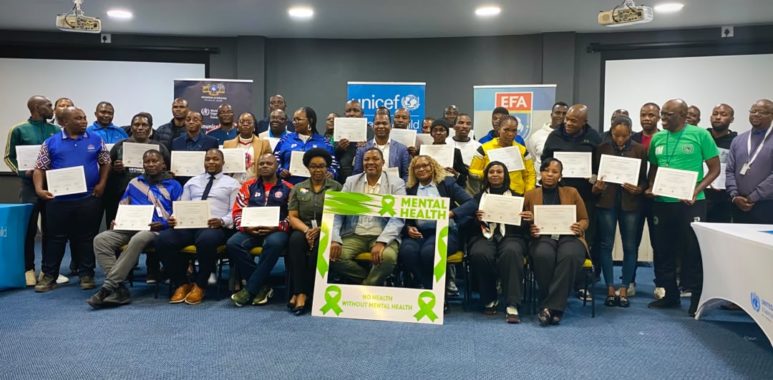
The Eswatini Football Association (EFA), in collaboration with UNICEF and the Ministry of Health, has strengthened efforts to promote mental health and psychosocial wellbeing in football through a Mental Health Sensitization Workshop held at the UN House in Mbabane.
The workshop brought together football coaches, clubs’ Public Relations Officers (PROs), members of the media and representatives from the Ministry of Health for an important engagement aimed at deepening awareness and understanding of mental health within the football environment.
Speaking during the engagement, the EFA General Secretary, Frederick Mngomezulu emphasised the importance of protecting and supporting the mental health and wellbeing of children, noting the significant role football plays in the lives of young people in Eswatini.
“We are not only converging to discuss mental health matters of children but to make a promise: that the mental health and wellbeing of every child must be protected, supported, and taken seriously.”
The Association highlighted football’s extensive reach among children and the need to integrate mental health and resilience into their holistic development. The EFA noted that the demands of football extend beyond physical ability, with emotional intelligence, mental preparedness and resilience playing an important role in performance and personal development.
Mngomezulu further described the partnership with UNICEF as an important opportunity to use football as a platform for positive change.
“Football reaches children where they are. It brings them together. It teaches teamwork, courage, discipline, respect, and resilience.”
Through the partnership, stakeholders will be encouraged to use football to raise awareness, strengthen support systems, build the capacity of those working with children and promote greater understanding of mental health within communities.
He stressed the importance of ensuring that mental health is treated with the same seriousness as physical health, reinforcing the message that “mental health is health, and no child should suffer in silence.”
The workshop also placed particular emphasis on the role of coaches and club PROs. Coaches were recognised as having significant influence in the development and wellbeing of young athletes, while PROs were acknowledged for their ability to use communication platforms to influence positive conversations and shape perceptions within society.
Mngomezulu encouraged all stakeholders to work collectively in creating an environment where children and other members of the football community can access support and feel comfortable discussing mental health.
“Let us work as one team — families, schools, coaches, health workers, communities, and leaders — to protect the wellbeing of every child.”
The participation of UNICEF and the Ministry of Health further highlighted the importance of collaboration in strengthening mental health awareness and support within the football ecosystem.
The EFA expressed its appreciation to UNICEF and all partners involved in the initiative, reaffirming its commitment to translating the partnership into meaningful action that promotes hope, healing and strength among children and the wider football community.
Mental health is part of the game.
Through continued collaboration, awareness and open conversations, football can play a meaningful role in breaking the stigma surrounding mental health and creating a healthier, safer and more supportive environment for everyone.